two steps to save money for injection mold process-spoon fork molder
2025-08-17
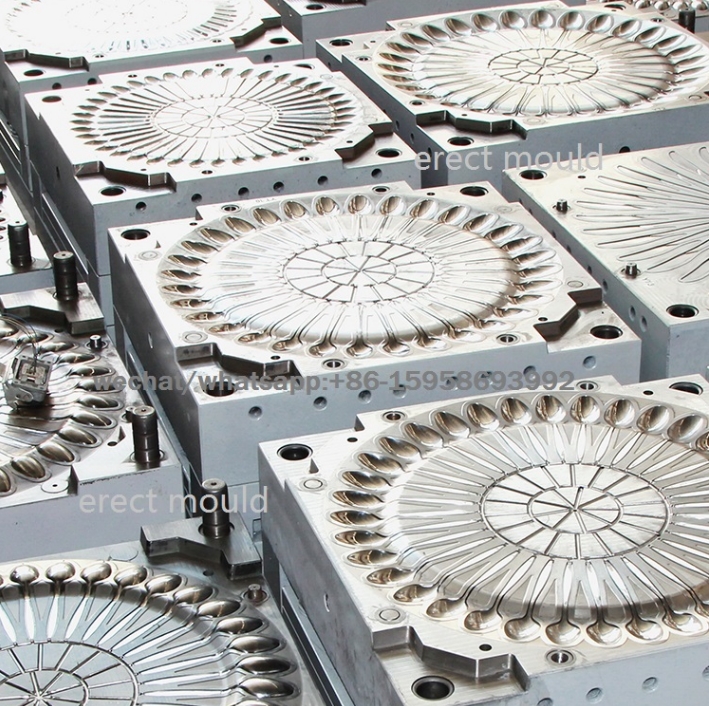
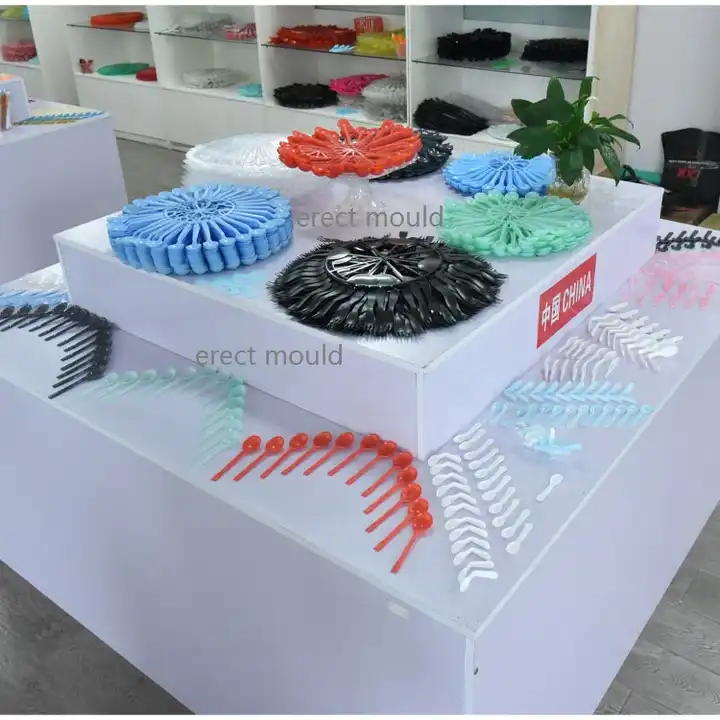
Injection mould For a quote, follow up and send a private letter for a consultation.The mold opening process of injection mold is a systematic engineering from "product requirements" to "producible molds," involving multiple aspects such as design, machining, assembly, verification, and other steps. Each step is interlinked, directly affecting mold quality, cycle and cost. Here is a detailed breakdown process.01The injection mould opening process(1) Product design and evaluationIn the design phase, clarify product requirements to ensure that the design is "moldeable" and avoid subsequent mold reworking due to unreasonable design.Product requirements confirmation includes clarifying product functions, appearance requirements, dimensional accuracy, materials and production scale, and then designing 3D models (such as STP format) and 2D engineering drawings (with key dimensions, tolerances, material specifications) according to the requirements.After the product is designed, it is best to do a DFM analysis (design for manufacturability), which is jointly reviewed by the mold engineer or production engineer to determine whether the product design is suitable for mold processing.For example, whether the product structure is inverted, deep cavity, uneven wall thickness, whether extrusion angle is sufficient, and whether non-appearance areas can be relaxed with roughness requirements, etc.Product design is the most critical stage in determining the cost of starting a mold, because the mold design, choice of materials, processing, and so on are all based on the product design.If you want to save as much money as possible when starting a mold, you must not only consider the function of the product and whether it can be produced, but also simplify the structure as much as possible, and the surface and precision requirements are as relaxed as possible to meet the requirements.2. Mold DesignBased on the optimized product model, designing the overall structure of the mold is the core part of starting the mold.Mold design consists of two steps: mold structure planning and mold flow analysis:The structural plan includes the number of moulded cavities, the design of the moulded surface, the pouring system, the ceiling system, the cooling system, and the exhaust system planning;Model flow analysis (CAE simulation)MoldflowThe software simulates the filling process, the cooling process, and conducts warping analysis to optimize the mold structure based on the simulation results.The mold drawing was thus drawn.Mold design is like product design, so that molds meet product production needs, as much as possible, and do not have excess performance.For example, the type cavity of a mold, although the number of types is high in capacity and production efficiency, if the production requirements are not high, the number of type cavity does not graduate too many. There are also mold materials, slides, etc., which can be saved.3 Preparation of materials and standard componentsPurchasing and preparing parts materials according to mold drawings ensures performance while controlling costs.Material procurement To save costs, the cavity / core material should be selected according to the product material and yield, and the mold shelf prefers the standard mold shelf to save processing time. Pressure pin, spring,Watering glovesPositioning sales, etc. may directly procure standard parts.4. Mold parts machiningThrough a variety of machining equipment, steel is processed into the designed part shape, These include coarse machining (crushing, machining), precision machining (CNC machining, electric spark (EDM), wire cutting (WEDM), grinding, polishing, etc.) and heat treatment (cheating and refractoring key parts such as mold cavities and cores to improve hardness and wear resistance).)5. Mold assemblyAll parts are assembled according to the assembly diagram to ensure mold accuracy and smooth motion.Using the framework columns and cones as a benchmark, ensure that the top and bottom molds are aligned, and then the various parts of the mold are assembled. After the assembly, they need to be tested and commissioned to ensure that their drawing requirements are met.6 Testing ModelsPut the mold on a injection molding machine to test production and verify whether the mold can produce a qualified product. It is a crucial part of finding problems, mainly to see whether the melt filling is complete when injection, whether there are fly edges, to check whether the product has shrinkage or deformation, to observe whether the products are smoothly removed, etc., to document defects and analyze the cause.7. Mold adjustment and acceptanceModify the mold according to the test mold report until the product is conformed. After the customer confirms that the sample is qualified, the mold acceptance is completed (the inventory of molds, the maintenance manual).8. Volume production and mold maintenanceAfter the mold is delivered, it enters the mass production stage, and it needs to be maintained regularly to ensure stability, such as:The volume-produced process for curing is used. Record the optimum injection parameters (TP, P, T) to ensure the conformity of production.Day-to-day maintenance. Clean the cavity after each production (removing plastic residue) and lubricate the catheter / slider (avoiding wear);Check regularly whether the top needle is bent and the waterway is blocked (to prevent mold damage causing the stoppage).02summaryThe injection mold opening process is a closed loop of "design → machining → verification → optimization," the core of which is "to ensure that the mold can steadily produce a qualified product through accurate design and machining, starting from the product requirements."The quality of each step affects the final outcome, of whichProduct design optimization and mold design rationality are the key to reducing subsequent rework and controlling costs. spoon fork molder.
mould maintainence
Some basic knowledge of mold processing