different types of plastic moulds
2025-10-31
In modern manufacturing, plastic molds are the core equipment to realize the mass production of plastic products, and their type division and application scenario are highly adapted, and molds with different structures and functions support product manufacturing in automotive, electronics, home appliances, medical and other fields.
For customers who want to open plastic molds, knowing the types of plastic molds can know what type of mold should be suitable for their products.
01
Mainstream mold types by molding process
The core classification of plastic molds is based on forming processes, and different processes correspond to differentiated mold structures and applicable products, and the following are the five main types.
1. injection molds
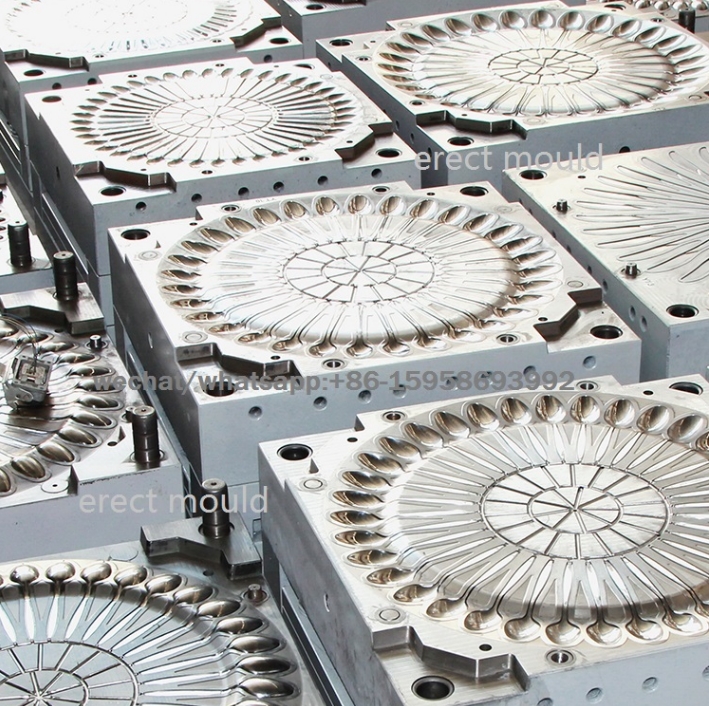
This is the most widely used mold type at present, where molten plastic is injected at high pressure through a injection machine into a closed mold type cavity and cooled to form a product.
Its structure comprises core components such as moulded cavity, moulded core, pouring system, cooling system and so on, which are characterized by high production efficiency, high product accuracy and the ability to form complex structural parts.
From daily use of daily necessities, mobile phone cases, notebook computer body, to the automotive industry dashboard, bumper, to the medical industry syringe components, all rely on injection molding production.
According to industry statistics, injection molds account for more than 60% of the plastic mold market, which is the basic equipment that supports the manufacturing of consumer and industrial products.
2. Extricate the mold
This type of mold is used by extruders to continuously extrude plastic melt out of the mold cavity to form long strips of products such as pipes, plates, and heterostructures. The mold structure is relatively simple, mainly composed of mouth mold, core rod, diodes, etc. The key is to ensure the stability of the cross-section size of the product.
PVC water pipes, PPR pipes, plastic door and window profiles in daily life, as well as industrial plastic sheets, cable protective covers, etc., are produced through extrusion dies. Its advantage is that it can achieve continuous production and is suitable for high-volume manufacturing of linear or plate-shaped plastic products, but the product complexity is low and mostly a regular cross section structure.
3. Blowing molds
Blowing molds are mainly used to manufacture hollow plastic products, and they are divided into two categories: hollow blowing and stretch blowing.
Hollow blowing is formed by blowing the plastic melt to the inner wall of the mold and cooling it. Typical products include plastic bottles, plastic barrels, oil tanks, etc. Stretch blow molding increases the axial stretching step, which can improve the strength and transparency of the product, common in PET beverage bottles, cosmetics bottles, etc.
Such mold structures focus on cavity sealing and exhaust design, which can achieve the efficient production of lightweight hollow products, and are especially widely used in the packaging industry.
4 Pressure molds
The plastic pressing mold, also known as the compression mold, is used by placing plastic raw materials directly into a heated mold chamber and applying pressure to melt the raw materials to form. It is suitable for thermosetting plastics and partially thermoplastics.
Its production process comprises the steps of adding material, closing the mold, pressurizing, holding pressure, cooling and opening the mold, and the mold structure is relatively simple and the manufacturing cost is low.
Typical applications include electrical switches and plug casings made of phenolic resin, electronic component packaging made of epoxy resin, and large thick wall products made of partially thermoplastic. Due to the advantages of thermosetting plastics in high temperature resistance and insulation, piezoelectric molds still occupy an important position in electrical, electronic and automotive parts.
5. Plastic molds
Plastic injection molds are formed by heating plastic sheets and using vacuum absorption force to align the sheets to mold cavities. They are mainly used in the manufacture of thin-walled plastic products, such as food packaging trays, cosmetics inner cases, electronic components plastic boxes, etc.
Molds are mostly made of aluminum alloy, which is light in weight and fast in thermal conductivity, and can quickly achieve sheet cooling formation. Such molds have a short production cycle and low cost, and are suitable for the production of thin-walled products in small batches and many varieties, and are frequently used in packaging, electronics, medical devices and other industries, but the product strength is low and difficult to withstand large external forces.
6. Other special types of plastic molds
In addition to the above mainstream types, there are a variety of plastic molds adapted to special needs.
For example, foam molding molds are used to produce foam plastic products, such as foam buffer materials, car seat foam, insulation materials, etc. By adding foam additives to the plastic raw material, the molds form porous structural products.
For customers who want to open plastic molds, knowing the types of plastic molds can know what type of mold should be suitable for their products.
01
Mainstream mold types by molding process
The core classification of plastic molds is based on forming processes, and different processes correspond to differentiated mold structures and applicable products, and the following are the five main types.
1. injection molds
This is the most widely used mold type at present, where molten plastic is injected at high pressure through a injection machine into a closed mold type cavity and cooled to form a product.
Its structure comprises core components such as moulded cavity, moulded core, pouring system, cooling system and so on, which are characterized by high production efficiency, high product accuracy and the ability to form complex structural parts.
From daily use of daily necessities, mobile phone cases, notebook computer body, to the automotive industry dashboard, bumper, to the medical industry syringe components, all rely on injection molding production.
According to industry statistics, injection molds account for more than 60% of the plastic mold market, which is the basic equipment that supports the manufacturing of consumer and industrial products.
2. Extricate the mold
This type of mold is used by extruders to continuously extrude plastic melt out of the mold cavity to form long strips of products such as pipes, plates, and heterostructures. The mold structure is relatively simple, mainly composed of mouth mold, core rod, diodes, etc. The key is to ensure the stability of the cross-section size of the product.
PVC water pipes, PPR pipes, plastic door and window profiles in daily life, as well as industrial plastic sheets, cable protective covers, etc., are produced through extrusion dies. Its advantage is that it can achieve continuous production and is suitable for high-volume manufacturing of linear or plate-shaped plastic products, but the product complexity is low and mostly a regular cross section structure.
3. Blowing molds
Blowing molds are mainly used to manufacture hollow plastic products, and they are divided into two categories: hollow blowing and stretch blowing.
Hollow blowing is formed by blowing the plastic melt to the inner wall of the mold and cooling it. Typical products include plastic bottles, plastic barrels, oil tanks, etc. Stretch blow molding increases the axial stretching step, which can improve the strength and transparency of the product, common in PET beverage bottles, cosmetics bottles, etc.
Such mold structures focus on cavity sealing and exhaust design, which can achieve the efficient production of lightweight hollow products, and are especially widely used in the packaging industry.
4 Pressure molds
The plastic pressing mold, also known as the compression mold, is used by placing plastic raw materials directly into a heated mold chamber and applying pressure to melt the raw materials to form. It is suitable for thermosetting plastics and partially thermoplastics.
Its production process comprises the steps of adding material, closing the mold, pressurizing, holding pressure, cooling and opening the mold, and the mold structure is relatively simple and the manufacturing cost is low.
Typical applications include electrical switches and plug casings made of phenolic resin, electronic component packaging made of epoxy resin, and large thick wall products made of partially thermoplastic. Due to the advantages of thermosetting plastics in high temperature resistance and insulation, piezoelectric molds still occupy an important position in electrical, electronic and automotive parts.
5. Plastic molds
Plastic injection molds are formed by heating plastic sheets and using vacuum absorption force to align the sheets to mold cavities. They are mainly used in the manufacture of thin-walled plastic products, such as food packaging trays, cosmetics inner cases, electronic components plastic boxes, etc.
Molds are mostly made of aluminum alloy, which is light in weight and fast in thermal conductivity, and can quickly achieve sheet cooling formation. Such molds have a short production cycle and low cost, and are suitable for the production of thin-walled products in small batches and many varieties, and are frequently used in packaging, electronics, medical devices and other industries, but the product strength is low and difficult to withstand large external forces.
6. Other special types of plastic molds
In addition to the above mainstream types, there are a variety of plastic molds adapted to special needs.
For example, foam molding molds are used to produce foam plastic products, such as foam buffer materials, car seat foam, insulation materials, etc. By adding foam additives to the plastic raw material, the molds form porous structural products.
different types of plastic moulds
mold design affect mould quality
mould maintainence